




Why Russell Reynolds Chose… to Stay

The philosophy was simply: no surprises.
What makes an occupier choose to stay in a building?
For executive search firm Russell Reynolds Associates, the decision came down to whether their existing London workplace could support both their current operations and their future growth. The firm had changed. The way its teams worked had changed with it, and the existing office was no longer giving them the environment they needed.
They wanted somewhere that could support more collaboration, accommodate confidential conversations and give clients a better experience when they came into the office. It also needed to feel right for a business of Russell Reynolds' calibre.
Scott Stevens, who oversees the UK business, framed the priority clearly: the goal wasn't to design a flashier office, but to build a space that worked harder.
That distinction shaped many of the decisions that followed.
The question was simple: could the building continue to work for the business?
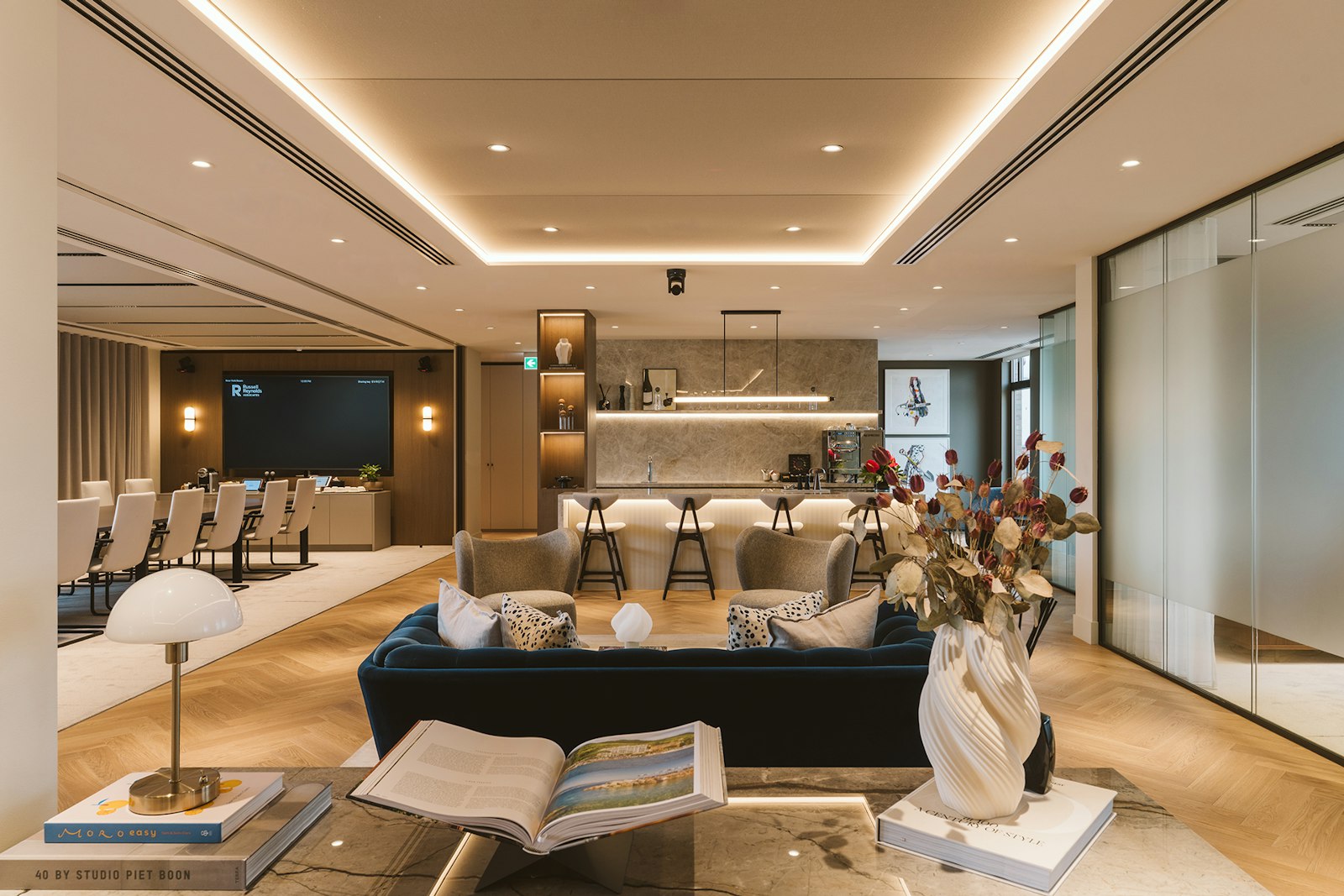
The look and feel from Thirdway was incomparable... the renders and the finished space were virtually identical. We knew the quality of product we were going to get.
The workplace had to work harder
The team wasn't looking to pack more people into the same amount of space. They wanted to get more from the space they had. That meant creating a greater variety of settings: places for focused work, informal conversations and collaboration, alongside client areas, meeting rooms and spaces that could accommodate larger gatherings.
Acoustics and integrated technology were prioritised throughout, while breakout spaces were given a hospitality feel rather than a traditional corporate look.
The changes have had an impact beyond just the London office. Teams from other Russell Reynolds locations have visited to see the space, with some of the ideas subsequently being adopted elsewhere in Europe.
That's perhaps one of the clearest signs that the workplace is doing its job. It has become something the business wants to share, rather than simply somewhere it happens to work.
The details changed how the space was used
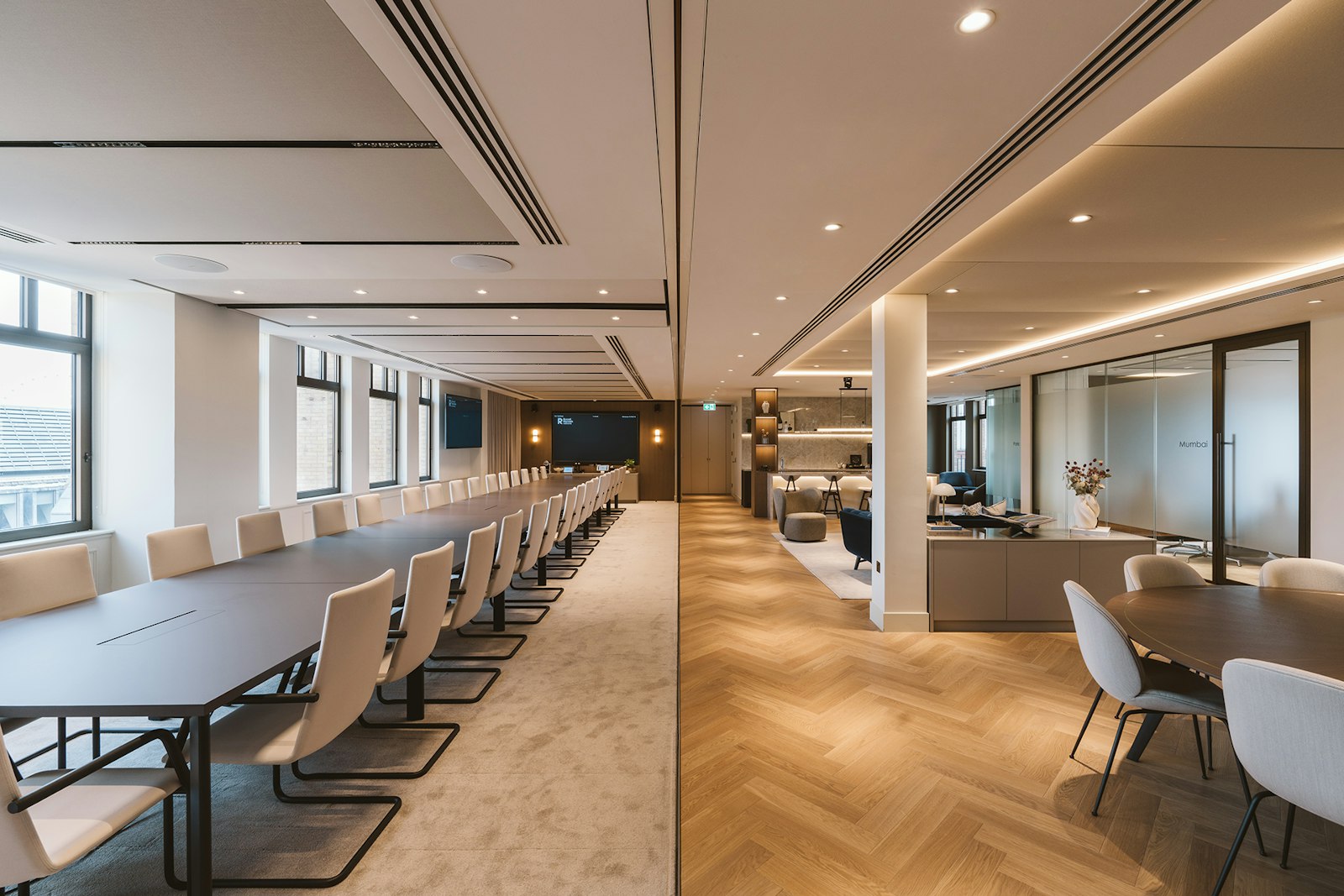
Some of the most important decisions weren't necessarily the most visible ones. The client suite became a flagship space, capable of hosting clients, leadership meetings and internal events.
Larger meeting rooms were opened to encourage collaboration rather than simply providing private working space. Flexible meeting environments supported a more hybrid way of working. The result was a workplace that could move between different roles throughout the day.
So…what makes an occupier stay?
Russell Reynolds' experience points to several factors.
Flexibility matters.
Not because every workplace needs to provide endless choice, but because businesses need spaces that can accommodate different activities, teams and working patterns.
Client experience matters.
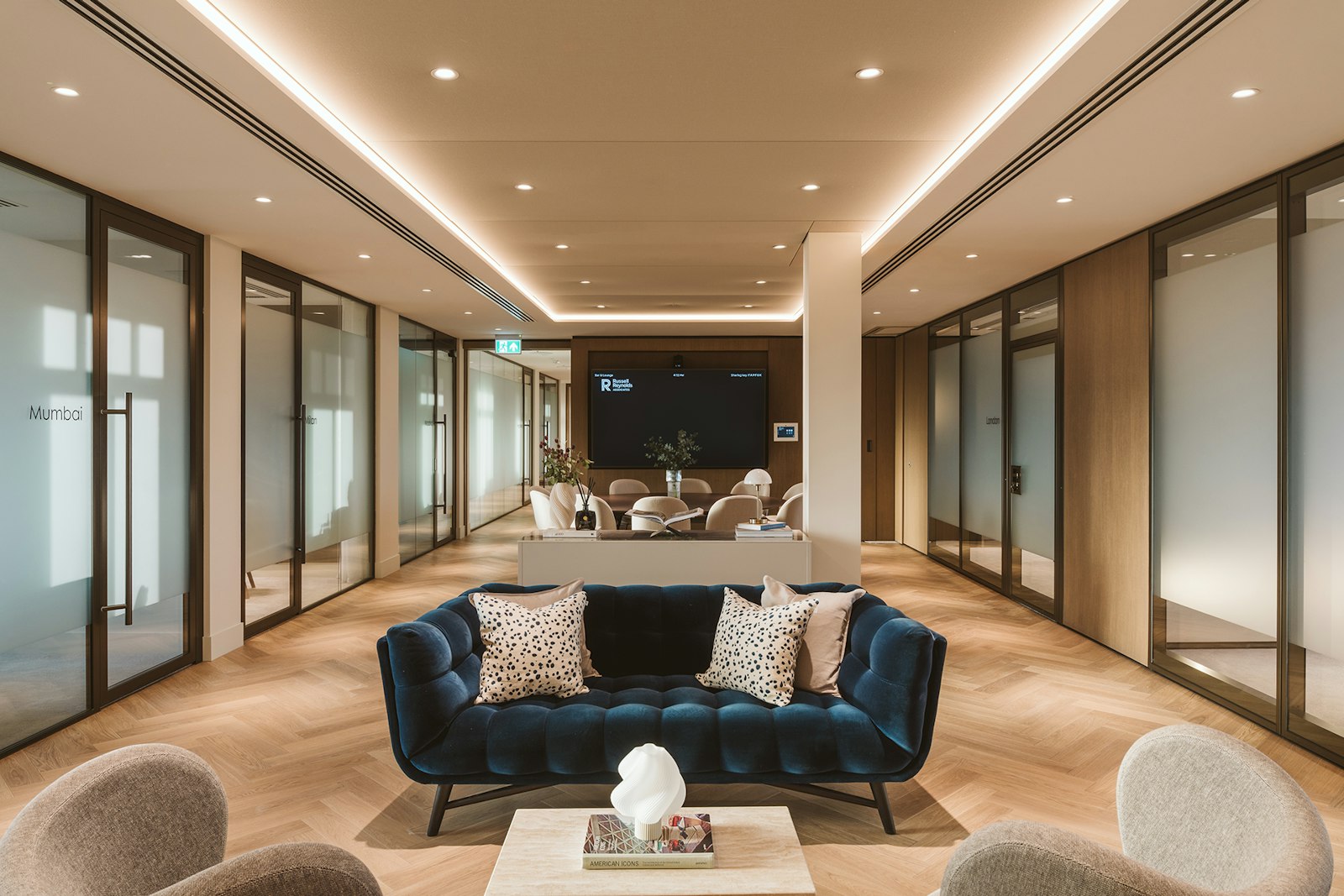
The workplace is part office, part meeting environment and, increasingly, part expression of the organisation itself.
Quality matters.
Not simply expensive finishes, but the accumulated effect of acoustics, technology, hospitality, privacy and the details that make a space feel considered.
And perhaps most importantly, the workplace needs to keep pace with the business.
For Russell Reynolds, the decision wasn't about making the office more impressive for its own sake. It was about making it more useful.
Russell Reynolds Associates - Where workplace meets client experience

Occupying two levels of Almack House, Russell Reynolds Associates' newly designed workspace captures the unique character of both their client and office spaces.
Explore the case study

